
PMax Google Ads Tips — Google Ads Optimization Tutorial 2
This installment covers the core points of Display + Shopping (PLA) + PMax delivery. Advertising has endless miscellany, but the core is one or two things; the rest is garnish.
Display ads — core points
Standard display ads
1. Creative:
(Each placement has its own sizes. In practice, batch-test sizes first, then deep-test the placements that perform — finding the slots that fit your category.)
2. Precise targeting:
Standard display has smart targeting, but you should still specify detailed conditions. The finer the targeting, the more precise the audience and the higher CTR and conversion. (The clearer your persona, the better the results — think ROI going from 0.5 to ~1.3.)
3. Respect the A/B test:
Placement gaps are huge and creative matters enormously — test constantly to find the best assets.
Dynamic display ads
1. Creative relevance:
Dynamic display lives or dies on relevance — content must match user interest and behavior to earn clicks and conversions.
2. Precise targeting:
Same precision requirements as standard — but ideally with remarketing lists imported from GA.
3. Bid strategy:
As before, choose by objective. Dynamic display is conversion-first, so avoid CPC bidding; run ROAS or CPA and analyze against real results.
Shopping & PMax — core points
Shopping and PMax demand far more from GMC than the formats above; creative requirements otherwise resemble display and search. PLA now just needs product selection, while PMax wants extra assets. For both, remember two things: 1. nail GMC; 2. nail asset management.
PMax Google ads
How to nail GMC
Shopping and PMax feed on product data uploaded through Google Merchant Center, so data quality decides display performance. Accuracy, completeness, freshness — so Google can match your products to queries.
1. Product titles:
Concise, accurate, clear, covering key features and keywords. (Don't stack keywords — GMC's risk system may flag you as a bot.) Guidelines: A. Write compact, attractive titles from the product's attributes and functions, with the core keywords included. B. Avoid irrelevant, repeated or generic keywords — "best", "good". C. Brand names and model numbers belong in titles; they boost relevance. D. Features and benefits can appear in titles to attract prospects. E. Numbers, symbols and verbs make titles livelier and more relevant.

Title examples
2. Descriptions:
Detail the features, functions, specs, dimensions — and describe the target audience.
3. Images:
High-quality, sharp, multi-angle, watermark-free.
4. Prices:
Accurate, competitive, and updated promptly on change.
5. Inventory:
Keep stock accurate to avoid the out-of-stock experience. (Its impact on conversion is dramatic — many shoppers filter by in-stock.)
6. Categories and labels:
Categorize and label correctly so customers browse easily (and so you can target feeds precisely).
7. Data consistency:
Identical product data across site, app and every channel. (The single most common non-conversion cause: GMC feeds refresh on a 24h+ cycle, so during promotions or repricing, prepare in advance and update page + feed together to avoid delisting. Few products → re-upload manually; many → use the API.)
How to manage assets
Follow the display-ads asset requirements plus the search-ads requirements. (Yes — PMax is a big stew of everything.)
Final notes:
Nearly 1,500 words in, and truthfully GMC optimization goes far deeper. I've kept to the core because most sellers run Shopify or WordPress, whose Google integrations and API-driven updates prevent most big problems.
The common issues are GMC bans and slow product review. If you have a big catalog on hand-written code and your own VPS — your problem list is enormous, and beyond this article. A few marketplace realities:
1. Price comparison
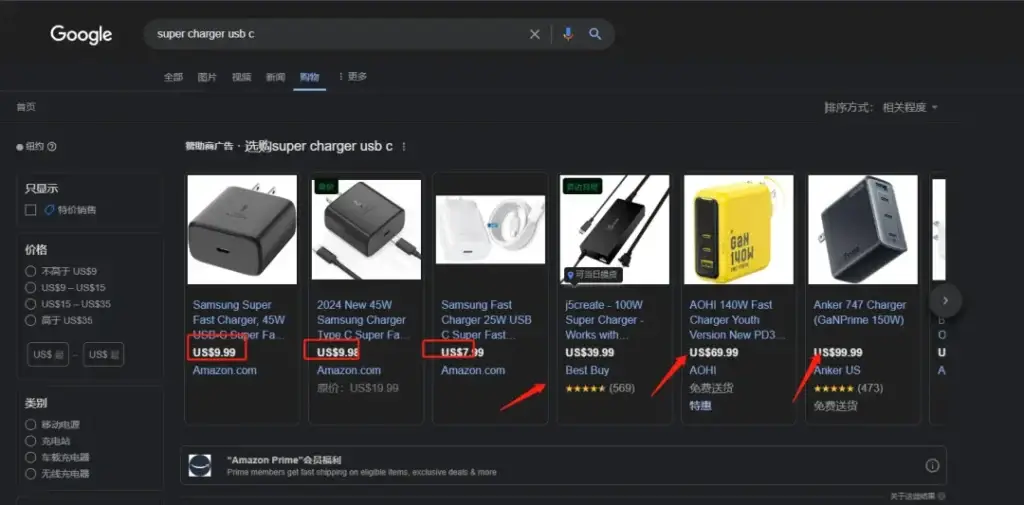
Ask why Google built Shopping in the first place — and how you'd build it: serve shoppers while stoking advertiser bidding. Simple: keyword relevance + product conversion rate; any product manager would prioritize those. Search any product and see for yourself: in the screenshot below, the top three results are Amazon items under $10; only after them come other brands at $40. Higher rank, higher conversion. How to rank? Keyword relevance. And? Price. So stop dreaming: Shopping means competing on price. (Especially for standardized products.)
Google Shopping results
2. Images and titles
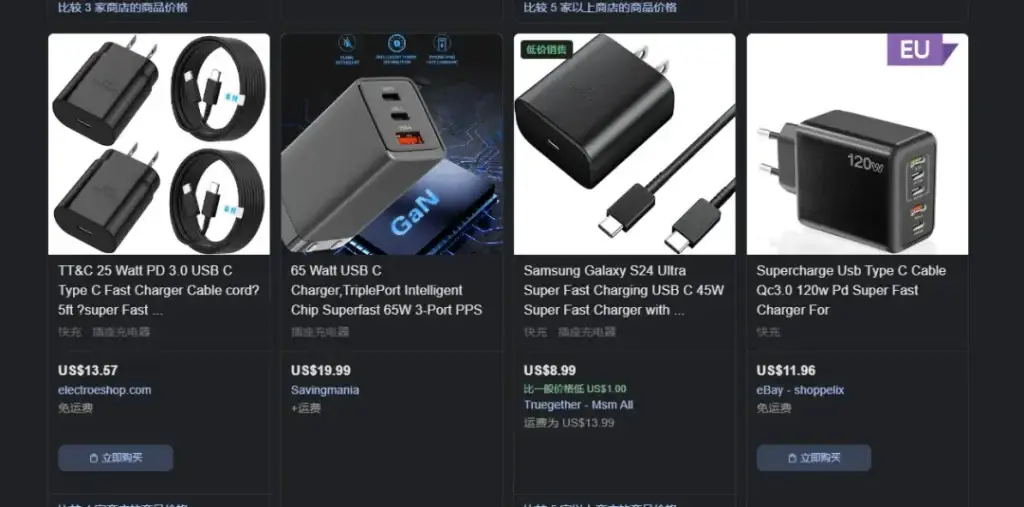
PLA performance ties to images and titles — high-quality, sharp images, and titles that accurately describe and attract clicks. Officially Google wants plain white-background images, nothing flashy. Yet some merchants display otherwise — there's a loophole, with GMC risk attached. Apply for multiple GMC accounts as insurance against bans.
Google organic shopping listings
(Aside: many people stuff GMC with multi-keyword feeds. I tested it — not zero effect: it speeds early spend during cold start, then does nothing.)
3. Update timeliness
Watch GMC long enough and this issue looms large. Example: your site runs multi-language on subdomains with prices exchange-rated from RMB — currency moves and you explode. Same if a front-end banner hard-codes prices. Self-built sites: watch API freshness. Google's crawler reads on-page prices to detect price fraud; lagging FX or translation APIs scramble prices constantly — twice-daily updates are already luxurious in volatile markets. Shopify/CMS platforms: don't relax just because there's an API. Some Shopify apps can't unify fields or don't sync with Shopify data, and multi-language apps produce mismatched prices, slow FX updates and general chaos. That's why I keep saying you need a front-end dev, or a media buyer who codes. Example site: price price--highlight price--large (product price) vs zrx-sticky-atc-product-price (sticky-bar price) — different classes, and some apps don't adapt. If you've wired Google event code, wire the app's code too or you lose events. If you're multi-language, align the apps' classes as well — or patch prices one by one and pray your memory holds. Annoying, right? Exactly why a technical hire is best.
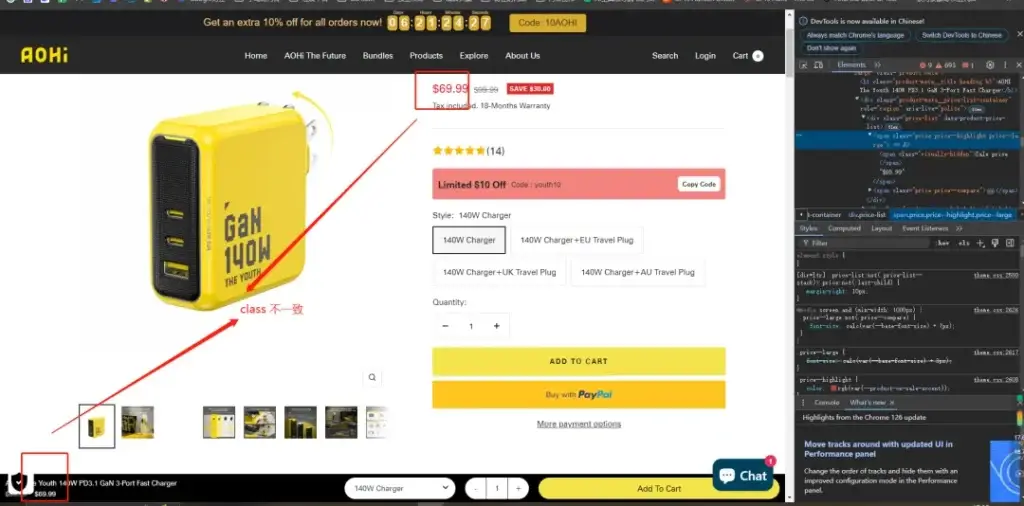
Shopify add-to-cart tag
4. GMC banned — now what?
First, adjust per the stated reason; with solid grounds you'll usually pass. But if you're "lucky" enough to draw the dreaded "your website needs…" — congratulations, prepare to spend! I've hunted for solutions; nearly none work, because everything in that notice is B***shift. Follow their explanations and you'll conclude the universe hates you — everything's done right, only prayer remains.
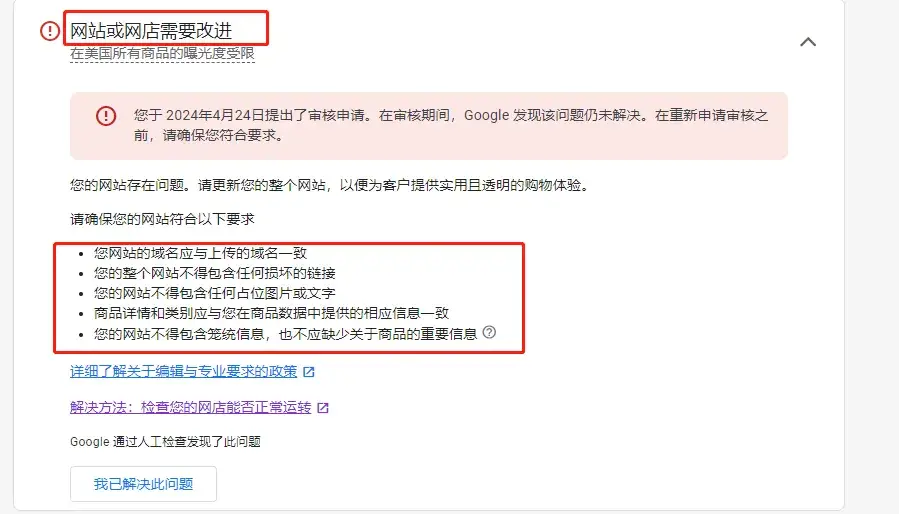
GMC banned
So: this means some detail tripped GMC's risk system — dropshipping, black-hat products, or something that just smelled wrong. GMC gives two review chances. Prepare thoroughly before requesting the first manual review; failing adds a 7-day penalty before the next attempt, and further failures extend it. If the first fails and you can't find the issue and no expert friend can help — pay someone reputable on Fiverr (that's what I did), about $150.
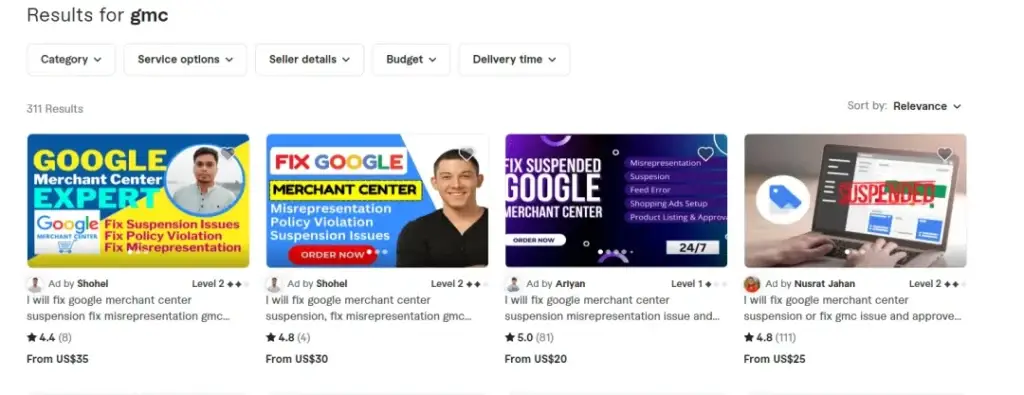
Fiverr gigs
A trusted domestic fixer works too, though I avoid exposing my domain to fellow Chinese sellers (you understand). Will it get banned again afterward? Xiaohongshu insists a twice-reviewed GMC never gets banned again — B***shift, mine did. Stop theorizing; hire the fix. How did the Fiverr guy do it? No idea — if I knew, I'd be selling on Fiverr myself. Also, it took him nearly a month…
FAQ
- What matters most when running Pmax campaigns?
- Two things — get Google Merchant Center right and manage your creatives well. Pmax is essentially Shopping plus Display plus Search rolled into one, with Shopping at its core; creative requirements simply follow those of display and search ads.
- How do I optimize GMC product data?
- Seven items — concise titles with core keywords but no stuffing (risk-control flags it as bot behavior); detailed descriptions; sharp, watermark-free multi-angle images; accurate, promptly updated prices; accurate stock (out-of-stock visibly kills conversion); correct categories and labels; and above all data consistency — the GMC feed takes at least 24 hours to refresh, so prepare price changes ahead and use the API when your catalog is large.
- Why do Shopping ads force price competition?
- Google ranks by keyword relevance plus product conversion rate, and price drives conversion. Search any product and you will see it — sub-$10 Amazon staples outrank $40 branded versions. Commodity products cannot escape price comparison.
- What do I do when GMC suspends my account?
- Fix whatever reason they cite — clear reasons usually clear up. The vague your-website-needs suspension usually means risk control was triggered (dropshipping or restricted niches). A failed manual review adds a seven-day cooldown before the next attempt; if you cannot crack it, hire a well-reviewed fixer on Fiverr — the author paid about $150 and it took nearly a month.