
Is It Too Late to Start an Independent Store as a Side Business?
Is it too late to start an independent store?
From my experience at least: most people aren't suited to running one.
Why people start
Several motivations:
1. Ex-Amazon / marketplace sellers (AliExpress, eBay…).
As competition grinds margins to nothing, they look toward independent stores. Some dream of becoming the next Shein or Temu; some want relief from margin anxiety — your store, your rules; some want a second growth curve, matching their marketplace volumes.
2. People who saw others make money and want a side income.
Open Xiaohongshu or Douyin: cross-border sellers doing XXX orders a day, tens of thousands of dollars a month. Teeth-itching stuff: "How can money be this easy?! Take me with you!"
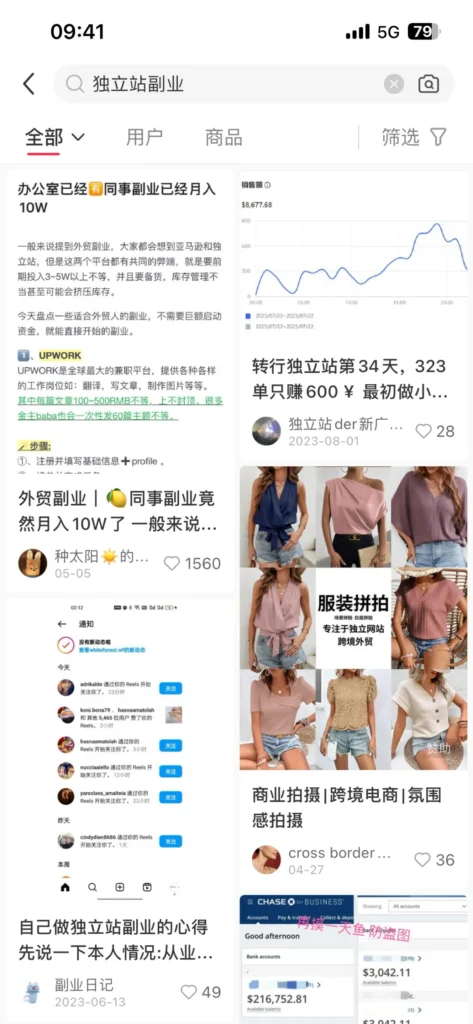
Side-business store
3. People already running independent stores who know nothing else.
Which of the three should do it? The third, certainly. The others? Read on.
What you must understand first
Marketplace sellers can try. But think through the following.
1. An independent store has no traffic.
Traffic must be bought. It's expensive — and time is more expensive still. There's exactly one way to validate a product quickly: SEM + influencer marketing. Nothing else. "SEO + social + short video?" — possible only in a few restricted niches (tobacco, adult, black-hat products), and even there merely possible, because every position you can think of was claimed long ago.
I once worked on a tobacco site — no ads allowed, SEO only. Two months to pass review and merely get displayed, hemmed in by restrictions the whole way…
Normal channels simply can't do it.
A leading SEO position costs serious money — often no less than advertising. A single good backlink: $200. Just one. Short video? You need a shooter, a director, a host — the full crew. Sellers with a mature domestic live-commerce team and scripts can go try; without one, just buy ads. As I said: money is expensive, time more so. I once interviewed an SEO from the black-hat world exploring "normal goods" — brilliant operator. Why switch? Policy risk had killed the site, and rebuilding a pure-SEO property from scratch is too slow and too exhausting. Since most marketplace sellers deal in ordinary goods: if you don't understand free traffic, stay out of its dark-arts swamp. Plenty of people fantasize about hacking their way out of ad spend; the greedy get harvested — one cut each, clean.
Do the basic SEO well, then spend on ads to validate.
2. The product must carry a high premium.
Every marketplace treats merchants as livestock and customers as gods. Products must be brutally competitive for customers to buy. Low price is forever the platform's direction — full consignment and Temu make that obvious; Amazon is slightly better, but copycat listings never die.
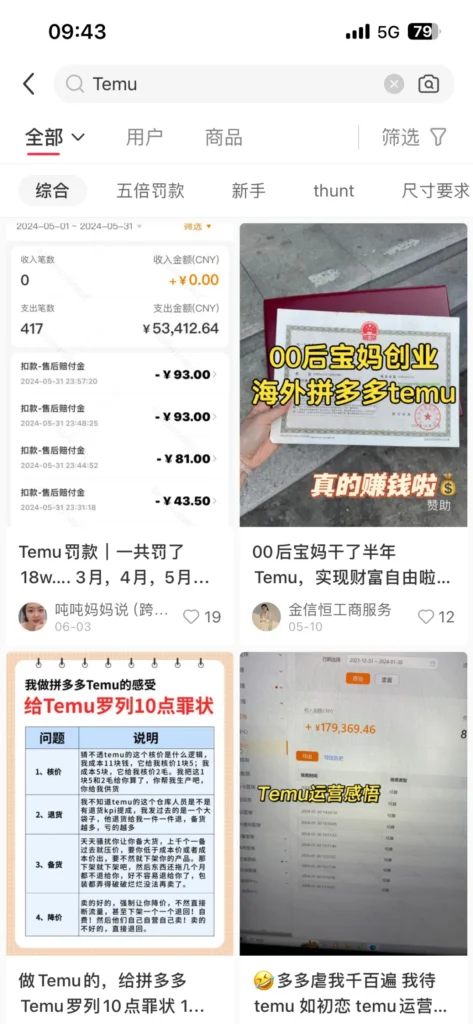
The Temu platform
Especially if you sell commodity-mold products with no moat — you'll be swearing at the sky.
With traffic this expensive, independent stores are absolutely wrong for low-ticket products. Conversion costs for ordinary goods run $17+, sometimes $30+. My rule: below a $50 AOV, you're basically dead — barring special tricks.
Traffic costs eat at least 15% of revenue; the very best get to 10%; a new site on a single paid channel is looking at ~40%.
A $50 AOV counts as solidly mid-to-high even on Amazon US.
Sellers used to volume and price wars, ask yourselves:
"At this price, why buy from you?"
"How do you differ from Amazon? Why is the same thing priced so differently?"
"What extra service does your store offer?"
These questions arrive in your support inbox. Unsatisfying answers become returns.
3. Do you have the people?
First, a confession: store or marketplace, the product is the real core.
I do traffic; I do full-stack operations; these days I do technical work too. Practice keeps teaching me how hard the product constraint binds.
Sometimes the product is so good it needs no operations — list it and orders flow. Amazon sellers know this well, especially from the easy years.
But an independent store is different: the product is only the foundation.
One: the leader must understand product, pricing and marketing strategy.
Product A's market price is ~$20; your audience rejects anything above $30. Facts, data-validated.
Now: below a $50 AOV you lose money. What do you do?
Bundling — how?
Why would anyone accept the bundle?
Repeat purchase? How do you raise it — EDM, brand marketing, community? You're at zero: where do users come from? How do you retain them? What's the service design?
These are the leader's questions. Think them through and the site doesn't bleed; fail and enjoy the invoices.
Two: an independent store needs engineering.
On WordPress it's worse: front-end, back-end, maybe a UI designer (three heads — outsourceable).
On Shopify, a good theme genuinely helps ($400–500, one-off) — but doesn't exempt you from tech: code tweaks, ad attribution deployment, UI, page-speed work. Someone must know this.
You can hire a technical media buyer. You know the price.
Three: an independent store needs promotion + content.
SEM + influencer marketing:
the expensive channels (at least two people).
SNS + SEO + EDM:
the cheap channels (one person can cover).
SEM is a craft — multi-channel testing, ROI improvement, budget control, scaling — it decides whether the site lives. This money can't be saved, nor can the ad budget.
Influencer marketing, unless you arrive with a Rolodex, means grinding from zero — a full-time burden.
Why?
Influencers with good numbers AND content fit AND acceptable rates AND willingness to work with you: under 8% (and that might be generous).
Every man wants the gentle, sensible beauty who adores him; every woman wants the handsome, attentive, wealthy, faithful man with a house, car, savings and no debt.
The more qualifiers, the rarer the match. Keep looking; they do exist.
As for SNS + SEO + EDM — all content work, differing in channel, efficiency and purpose; SEO adds the backlink grind. One person can carry it, especially with AI assistance.
If none of the above scares you, go ahead.
One last bucket of cold water.
With the right hires — or a boss who personally learns the craft — the odds are actually good.
But the ceiling rarely rivals marketplaces (for most sellers anyway).
Look at Savi times' financials: the independent-store share grows, but next to marketplaces it's a rounding error — and that's a listed company.
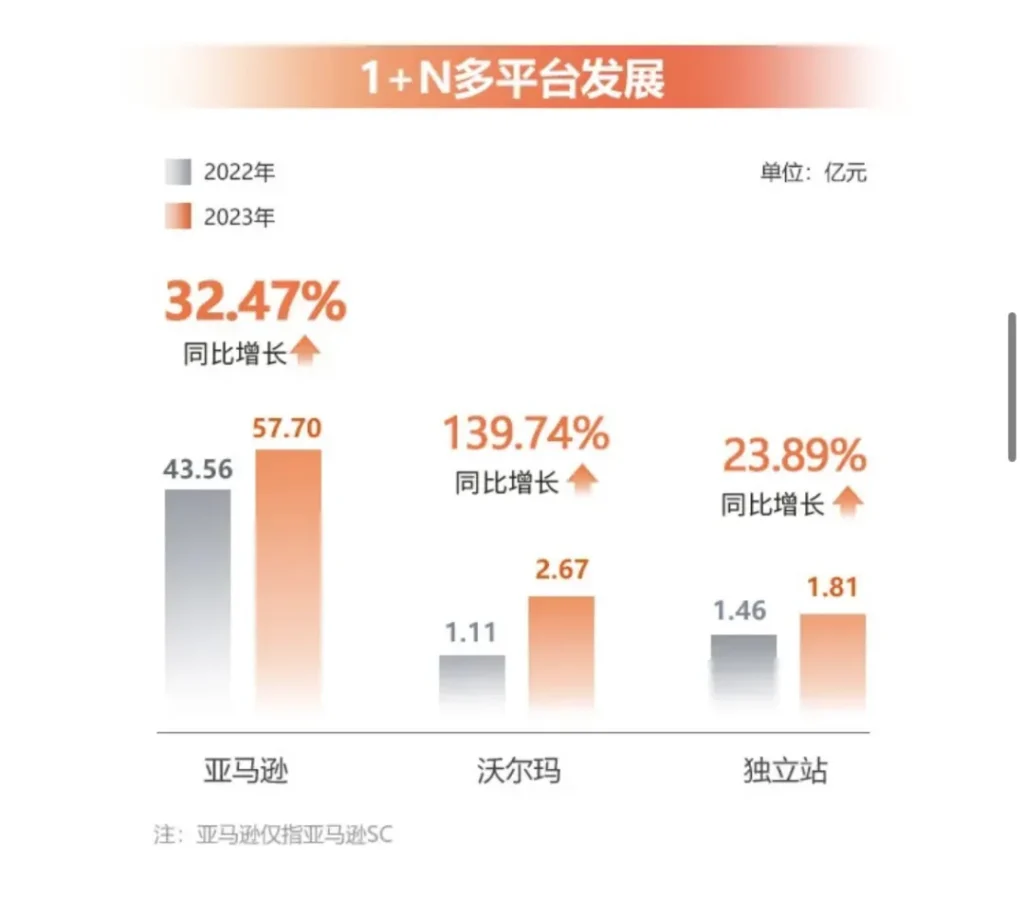
Savi 2023 financials
A city a division couldn't take — will your handful of people overturn it?
Reaching Shein-class revenue means product lines, supply chain, logistics, overseas warehouses, traffic optimization, private domain, channel expansion… a mountain of work, all brutally hard.
If you've heard all this and still believe — genuinely believe — I'll be publishing some paid articles later; you're welcome to pay and taste. Real campaign data, mosaicked as needed, but the core message stays:
"Since when was business easy?"
So — as a side hustle?
I meant to address the side-business angle directly. If you've read this far and still hold the side-hustle mindset, answer these first:
1. Do you understand the business?
Of the jargon above, how much do you know? Do you know how much each factor affects a store — validated with data? Have you researched product categories, sourcing, and their risks?
2. Can you do the math?
Sum the people, resources and money above — what's your estimate? Too expensive? Where exactly would you cut? Fine with it? Where does the money come from?
3. Can you carry it?
The project loses money — what do you do?
No one helps early on — what do you do?
Everyone else quits — do you?
Your spouse and parents tell you to get a job instead of chasing "your venture" — what then?
If you persist — is that faith, or a leaf blinding your eyes?
If you quit — where to?
One thought makes a martyr; one thought makes a buddha.
Why? Because you are the store's owner. There is no one behind you. Pass the blame — to whom? No one can fix the hole for you. You have only yourself.
Your capital is salary money — hard-earned. The store demands heavy investment across endless pitfalls. "I'll just try; worst case I go back to work" — that is precisely the side-hustle attitude.
Sorry. It cannot work that way.
"Since when was business easy?"
And the next line?
"If business were this profitable, why would it be your turn?"
If you understand nothing, and I say it's hard while another says he makes millions monthly — whom do you believe?
Either way you're gambling, because you know nothing — so you'll pick whatever sounds pleasant and believable.
And does the pleasant, believable version make you money?
Really?