
Shopify Payments — Set It Up Step by Step in 5 Minutes
Selling on Shopify, payments are every merchant's top concern — this is cash-flow security. Among all the options, Shopify Payments is the weapon of choice. It simplifies collection, keeps transaction fees low, offers flexible payment methods, and suits beginners especially well. Having been through it, I strongly recommend it.
What is Shopify Payments
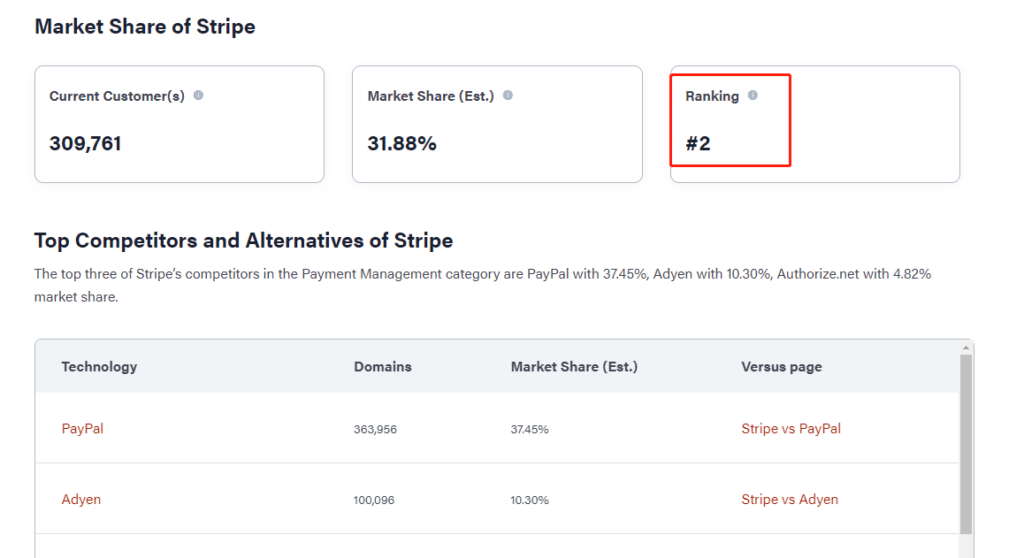
Shopify Payments is Shopify's own payment tool: no third-party gateway hassle — one platform, and customers pay easily. Shopify itself isn't a payment gateway (it holds no payment license); for an integrated flow it partnered with Stripe long ago, with Stripe providing the technology and gateway. Stripe is the world's #2 acquiring channel, behind only PayPal — and if you sell mainly to the US and Europe, it's essentially mandatory.
It supports credit cards, Apple Pay and Google Pay — whatever the customer prefers, you're covered. Perfect for beginners who want fewer moving parts.
How to enable Shopify Payments
First, the bad news for mainland Chinese merchants: mainland businesses aren't currently supported (nor by Stripe). Mainland merchants generally need an overseas entity — Hong Kong, Taiwan, the UK, the US, etc.
Taking Hong Kong SAR as the example, after registering your Shopify store, prepare the following:
- Opening the account
- Basic requirements: complete identity information, business license (per country), and bank account details.
- Country restrictions: only specific countries qualify — mainly North America, Europe and parts of APAC. Merchants there save the extra third-party gateway fees.
- Business restrictions: black-hat and gray-market products are out (you wouldn't pick Shopify for those anyway) — but even ordinary sensitive categories can trip risk control. See the prohibited businesses list at the end.
- Bank account restrictions:
- The account must be a demand deposit account at a bank located in Hong Kong SAR, denominated in HKD.
- The payee name and legal entity must match the linked account's name and type:
- Sole proprietors must attach a personal bank account with their personal legal name as payee.
- Corporations and partnerships must attach a business account with the business name as payee.
- Personal information required for:
- The individual creating the Shopify Payments account
- The business linked to the account
- The individuals who ultimately own or control the company — owners and executives with signing authority
- Configuring payment options
- In the admin's Payments section, ensure Shopify Payments is active. Enable complementary methods — PayPal, Amazon Pay — for customer variety.
- Concretely:
- In Shopify admin, go to Settings > Payments.
- Under Shopify Payments, click Manage.
- Review the rates per payment method.
- Verification and compliance
- Depending on region, Shopify may require KYC. Provide genuine identity information and store documents for a smooth review.
- Accepted documents:
- Identity:
- Passport
- ID card (front and back)
- Certificate of registered particulars
- Tax exemption certificate
- Vietnamese refugee card
- Address:
- ID card (front and back)
- Certificate of registered particulars
- Utility bill
- Bank statement
- Phone bill
- Insurance statement
- Government or judicial documents
- Lease
- Property sale contract
- University bill or letter
- Company/entity:
- Business register extract
- Certificate of incorporation
- Business registration certificate
- Identity:
Shopify's review is tedious, but the payoff justifies it completely. Low fees, broad support, fast settlement — what's not to love? With payments handled, you can pour your energy into supply chain and brand.
Final note: policies and risk controls update constantly; this article may lag. Always check Shopify's official Hong Kong guidance for the current picture.
FAQ
What are Shopify Payments' fees?
Relatively the cheapest, and activating it drops Shopify's commission dramatically. Exact figures depend on your volume and currency, so I can't generalize — run the numbers in your Shopify admin.
Can I use Shopify Payments without an overseas company?
No. Mainland Chinese companies aren't on the supported list. Register an overseas entity, or use alternatives like PayPal or 2Checkout.
Shopify prohibited businesses list
Excerpted from Shopify's prohibited businesses terms; the list updates without notice. Note that when Shopify's risk system flags your domain or services, there is no warning — you simply receive the ban email. No warning, so be careful with your property.
- Financial and professional services
- Investment and credit services
- Securities brokerage; financial or mortgage consulting and debt reduction; credit counseling or repair; real-estate opportunities; lending instruments
- Financial and legal services
- Money transfer, check cashing, remittances, wire transfers, purchasing agents, currency exchanges or dealers, bail bonds, collection agencies, law firms collecting funds beyond service fees (e.g. holding client funds, settlements or disputed funds via Shopify Payments)
- Virtual currency or stored value
- Virtual currencies (e.g. Bitcoin) that can be monetized, resold or converted into physical or digital goods and services or otherwise leave the virtual world; stored value or credits maintained, accepted and issued by anyone other than the seller
- IP infringement, regulated or illegal products and services
- Adult content and services
- Pornography and other obscene materials (literature, imagery, media); sex toys; sites offering sex-related services such as prostitution, escorts, pay-per-view, adult chat, mail-order brides, adult dating
- Counterfeit or unauthorized goods
- Sale or resale of unauthorized brand-name or designer products; illegally imported/exported goods
- Ghostwriting services
- Essay mills and thesis ghostwriting
- Gambling
- Lotteries; bid fees; sports forecasting or odds-making; fantasy leagues with cash prizes; internet gaming; contests; sweepstakes; games of chance
- Intellectual property or proprietary rights infringement
- Sale, distribution or access to counterfeit music, film, software or other licensed material without authorization; products or services directly infringing or facilitating infringement of trademarks, patents, copyrights, trade secrets or privacy rights; unauthorized use of Shopify IP; use of the Shopify name or logo outside brand guidelines; implying false endorsement by or affiliation with Shopify
- Regulated or illegal products and services
- Cannabis dispensaries and related businesses; tobacco, e-cigarettes and e-liquid; online pharmacies; contact lenses; age-restricted goods or services; weapons, parts and ammunition; gunpowder and explosives; fireworks; products or services with region-specific legal differences; goods or services illegal in your target jurisdictions
- Sanctions
- Using the payment services for the benefit of countries, organizations, entities or persons under government embargo or blockade, including anyone on government sanctions lists
- Other products or services prohibited by legal or financial partners
- Money aggregation
- Licensed or unlicensed money aggregation, factoring, or other activities designed to obscure the origin of funds
- Products or services providing peripheral support for goods or services deemed illegal in Hong Kong SAR
- Advertising sales for products or services illegal in Hong Kong SAR
- Money aggregation
- Drug paraphernalia
- Any equipment for using or producing drugs — pipes, vaporizers, hookahs
- Embassies, consulates, foreign governments
- Sales benefiting non-Hong-Kong government entities, including consulates and embassies
- High-risk businesses
- Bankruptcy attorneys; computer tech support and IT helpdesks; travel booking services and clubs, airlines, tickets and cruises (excluding small-deposit day tours); timeshares; prepaid phone cards, phone services and mobile phones; telemarketing, telecom equipment and telesales; freight forwarding; negative-response marketing; credit card, foreclosure and identity-theft protection; lead generation; paying loans by credit; any business we deem high financial risk, legal liability or in breach of card-network or bank policies; any business that (a) engages in, encourages, promotes or celebrates unlawful violence or physical harm to persons or property, or (b) does so toward groups based on race, religion, disability, gender, sexual orientation, national origin or other immutable characteristics
- Multi-level marketing
- Pyramid schemes, network marketing, referral marketing programs
- Pseudo-pharmaceuticals
- Pharmaceuticals and health-claim products not approved by relevant local/national regulators
- Signal decoding/descrambling/jamming products
- Descrambling products; cell-phone jammers
- Social media activity
- Selling Twitter followers, Facebook likes, YouTube views, Instagram followers, etc.
- Substances designed to mimic illegal drugs
- Legal substances with the effects of illegal drugs (e.g. salvia, kratom)
- Uses of Shopify Payments inconsistent with its intended purpose or prohibited by processor terms
- Primarily using it as a virtual terminal (manually keying card details); processing without genuine goods/services sold, or accepting donations; card testing; evading chargeback monitoring; sharing cardholder data with other merchants for payments or cross-selling
- Video game or virtual world credits
- Selling in-game currency unless the merchant operates the virtual world
- Unfair, predatory or deceptive practices
- Any conduct misrepresenting the accuracy of information, services, advice or guidance offered by the merchant
FAQ
- What is Shopify Payments?
- Shopify's own checkout solution built in partnership with Stripe (Shopify holds no payment license itself — Stripe powers the gateway). It supports credit cards, Apple Pay and Google Pay, and is known for low fees, fast payouts and high authorization rates — essential if you mainly sell to the US or Europe.
- Can mainland China merchants use Shopify Payments?
- No — mainland companies are not on the supported list, and neither does Stripe support them. You need an overseas entity such as Hong Kong, Taiwan, the UK or the US, or you can fall back to PayPal, 2Checkout and similar processors.
- What do I need to activate Shopify Payments?
- Full identity details, a business license where required, and a local bank account. For Hong Kong, the account must be an HKD demand-deposit account whose payee name matches the legal entity; KYC verification may ask for a passport or ID, proof of address and company registration documents.
- Which businesses are banned from Shopify Payments?
- Financial and investment services, virtual currency, adult content, gambling, tobacco and vapes, counterfeit goods and multi-level marketing all sit on the official prohibited list. Shopify's risk team usually bans without warning — check the list first if your niche is sensitive.