
Shopify + AliExpress: How to Run a Dropshipping Business — 3 Things to Watch
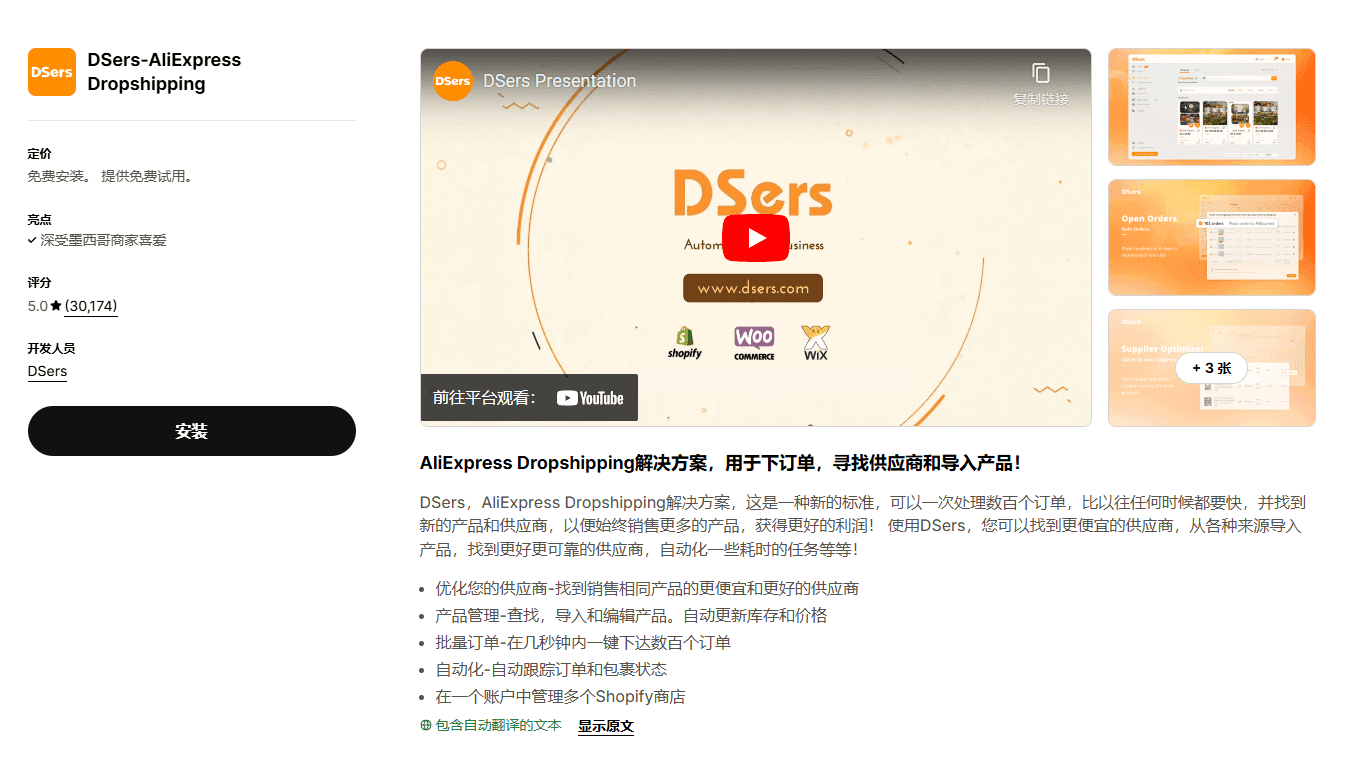
Dropshipping is known in China as the "no-inventory model" — before the refund-only policy era, buying on Pinduoduo and reselling on Taobao was everywhere. In cross-border e-commerce, dropshipping's low barrier and flexibility made it an early favorite. Pairing Shopify with AliExpress makes it efficient and convenient — with several things worth watching.
What is dropshipping?
Dropshipping is inventory-free e-commerce. The seller takes orders on their storefront, forwards them to a supplier, and the supplier ships directly to the customer. You focus on marketing and customer service with no inventory or logistics to manage.
Example: you open a Taobao shop, pick any Pinduoduo store, list their products at a markup — when a customer buys, you order from the Pinduoduo merchant, who handles fulfillment. The spread is your profit.
Why would customers pay the markup?
Sticking with the domestic analogy:
There are endless products, and however strong platform algorithms are, they have limits. Some people shop offline; some don't know products A, B, C, D exist — or that the category exists at all.
That's the information gap. Human time and attention are finite, so when a well-run storefront with good service and marketing happens to be the one a customer sees, they buy from it. Whether they return is another matter.
The gap exists on the Chinese internet and the English internet alike. Dropshipping was invented abroad, where the gap — and the margins — are even bigger, which keeps attracting new players.
Why Shopify and AliExpress
Shopify is a powerful, idiot-proof store builder that frees you to focus on marketing and service. As the analysis above shows, your core advantage isn't product or channel — it's your ability to acquire traffic, market and serve. Those set your profit ceiling.
AliExpress is Alibaba's overseas Taobao — famous for low prices, smooth logistics and endless products. It sets your profit floor: the lower the cost, the higher your margin.
Combined, they give dropshipping:
1. Convenient store building (Shopify)
- A professional storefront, fast.
- Rich themes and apps with full customization.
- Multi-language, multi-currency, global reach.
2. Diverse supply (AliExpress)
- 100M+ products across electronics, fashion, home and more.
- Low prices — room for healthy dropshipping margins.
- Global shipping with flexible logistics.
How to set it up
The process matches ordinary store building, with one extra app: DSers — the best AliExpress app I've used; it even lists Tmall, Taobao and Temu products. And it's free, with paid tiers for better service.
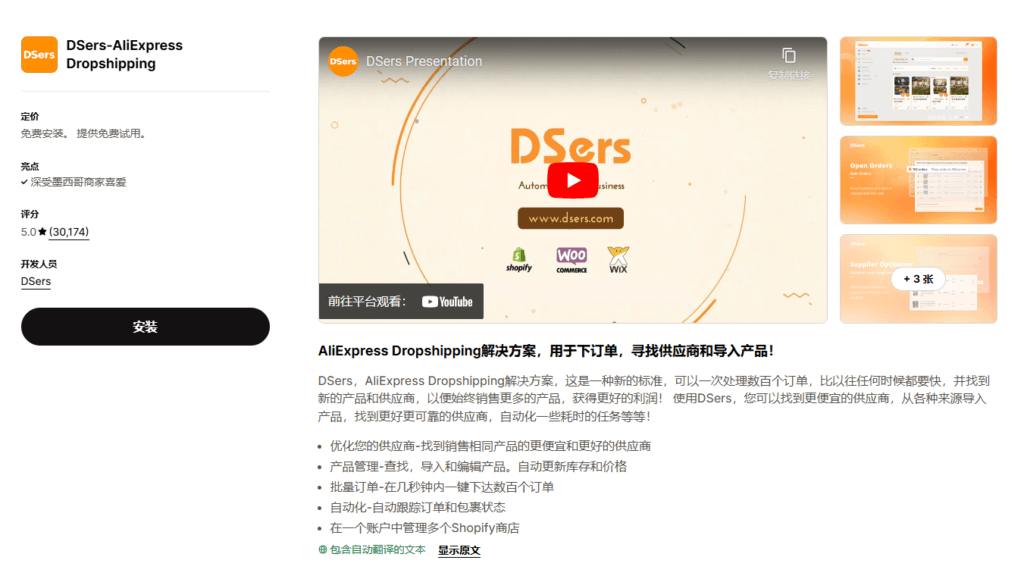
The quick guide:
Step 1: build the Shopify store
- Register: head to Shopify, pick a plan, complete signup.
- Pick a theme: the default "Dawn" works well.
- Customize: upload the logo, set navigation and layout for a good experience.
Step 2: integrate AliExpress via DSers
To sync AliExpress products into Shopify you'll need:
An AliExpress account: joining the dropshipping program is a bonus, not a requirement.
Target merchants: know your product focus — too broad hurts your promotion.
The DSers app: my only recommendation — not because it's provably best, but because it works well in my experience. The App Store has plenty more to try.
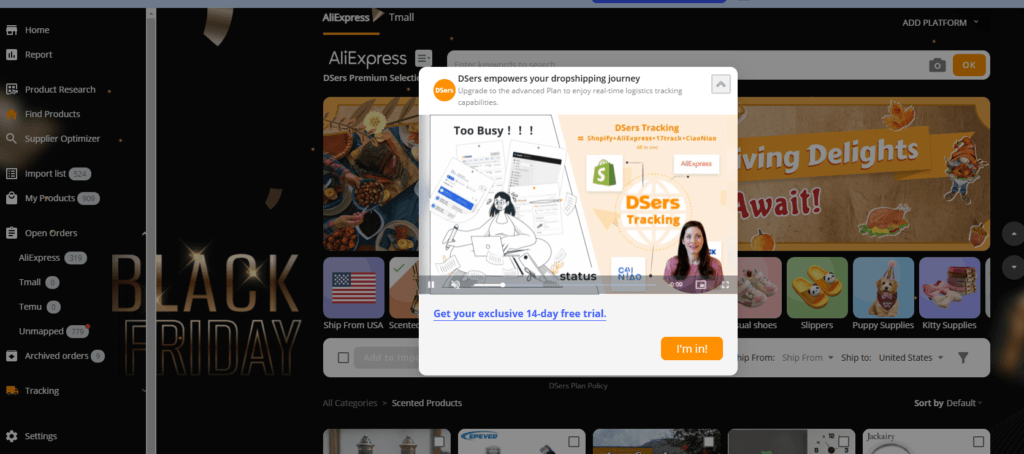
Steps:
1. Register the AliExpress account.
2. Install DSers.
-
Open the app, log in to your AliExpress account as prompted, authorize the API — one-click product import unlocked.
-
Find your target products and configure import conditions — pricing rules etc., all visible in DSers settings.
Their YouTube tutorials cover the rest — English only, alas; treat it as language practice:
https://www.youtube.com/watch?v=HigzvSrXuMo
Step 3: optimize product pages
Design and content drive conversion:
- Titles: include keywords, e.g. "Quality AliExpress Watch — Free Shipping".
- Images: high quality, ideally lifestyle shots.
- Descriptions: concise, compelling functional detail.
- Reviews: AliExpress reviews can be imported to Shopify for credibility.
Step 4: payments and logistics
- Payments: enable PayPal, cards and Shopify Payments for variety.
- Shipping: use AliExpress ePacket or AliExpress Standard Shipping — affordable and reasonably fast.
- Order automation: DSers forwards orders to suppliers automatically.
Step 5: marketing
Run ads, run ads, run ads. Do social, do social, do social. Forget SEO.
1. Social ads
Facebook and Instagram ads targeting your market are the best route.
- Target "AliExpress + product", e.g. "AliExpress summer dresses".
- Create striking copy and video.
2. SEO — not recommended
Organic traffic sounds great, but anyone who's done SEO knows product pages and affiliate-style pages barely rank. Google's policy explicitly labels thin affiliate content as spam. Excerpt:
Thin affiliate pages are pages with product affiliate links on which the product descriptions and reviews are copied directly from the original merchant without any original content or added value.
A page is considered thin if it belongs to a program that distributes its content across a network of affiliates without additional value. These sites tend to look templated, with identical or similar content within the site or across multiple domains and languages. Search results filled with such pages create a poor user experience.
Not all affiliate sites are thin, however. Good affiliate sites add value — extra pricing information, original reviews, rigorous testing and ratings, category navigation, and product comparisons.
3. Email marketing
Do it after you have customers. Under the new spam policies, emailing an unsubscribed list can get your business email banned — and with no customers early on, who would you email anyway?
Closing
If you want a low-cost way to start, Shopify + AliExpress dropshipping is worth trying — a one-stop pipeline from store to products to marketing.
Cold water incoming though: you're arbitraging price differences between platforms, and your only edge is traffic. The moment ad costs rise, margins dive — and as shown above, SEO traffic isn't available to you.
So: for cross-border beginners, the Shopify-AliExpress route is recommended and viable — it gets the full loop running fast. But scaling big through it is hard; you'll need at least two more core advantages — SEO, traffic diversification, or supply-chain strength.
FAQ
How do I pick quality AliExpress suppliers?
Check ratings and reviews. Confirm shipping options and dispatch times. Talk to the supplier — ask about branding options (logo printing). Anyone who communicates responsively is worth working with.
How is dropshipping profit calculated?
Profit = sale price − product cost − shipping − Shopify subscription. For healthy margins, favor small, high-perceived-value items — jewelry, electronic accessories and the like.
FAQ
- What is dropshipping?
- An inventory-free e-commerce model — you take orders in your own store, pass them to a supplier who ships directly to the customer, and keep the margin while focusing on marketing and service. The information gap is bigger overseas, and so are the margins.
- Which app connects Shopify to AliExpress?
- DSers — the best AliExpress app the author has used. The free tier is enough to start and it can even list Tmall, Taobao and Temu products. Flow: register an AliExpress account, install DSers, sign in and authorize the API, set product and pricing rules, then import in one click.
- How do I pick good AliExpress suppliers?
- Check seller ratings and reviews, confirm shipping options and handling times (prefer ePacket or AliExpress Standard Shipping), and ask about branding options like logo printing. Suppliers who actually respond to messages are usually the good ones.
- How is dropshipping profit calculated, and can it scale?
- Profit equals sale price minus product cost, shipping and the Shopify subscription; high-margin small items like jewelry and electronics accessories work best. It is a great way for beginners to learn the ropes, but scaling on ad-bought traffic alone is hard — as ad costs rise margins collapse, so growth needs extra moats like SEO, diversified traffic or supply chain strength.