
Set Your Google Ads Objective and Goal in 1 Minute
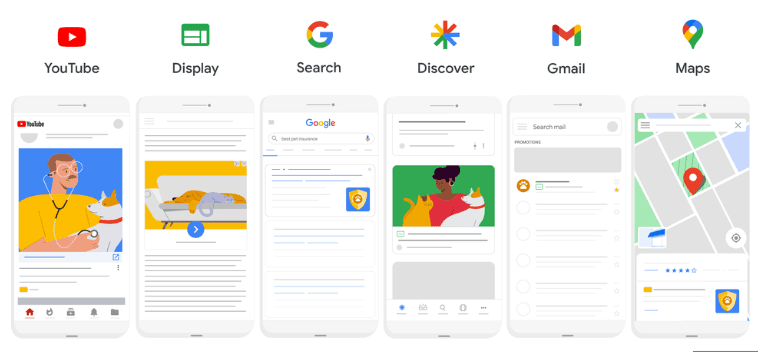
With the campaign workflow clear, the next step is choosing your objective. Google Ads offers plenty of them; for cross-border e-commerce, traffic and conversions come first. This article explains how to set your Google Ads goal — with answers to some classic boss-questions at the end.
Table of contents
1. Clarify the purpose
Your campaign type depends on your advertising purpose — distinct from the goal.
The purpose is always the same: I want money!
The goal is concrete: market share, absolute top-of-page share for a keyword, and so on.
Purpose is general; goal is specific. Example:
"I want to own the absolute top-of-page position for keyword XXX, to win more traffic, to make money."
Making money is the purpose;
traffic is the validation metric;
"owning the top-of-page absolute share for XXX" is the goal.
Sharp readers will notice: a goal needs a validation metric, and the metric must connect to the purpose — otherwise it's a castle in the air.
2. Clarify the goal
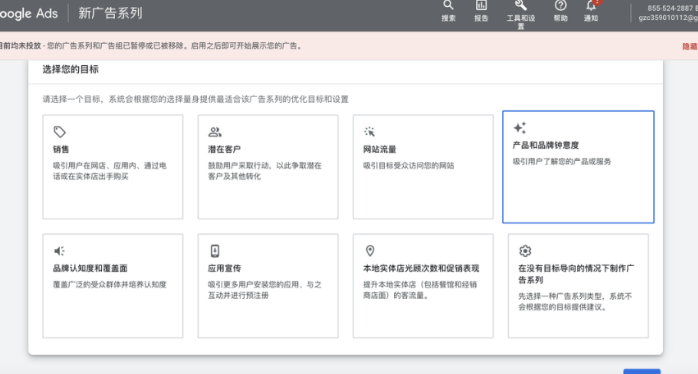
Highlighted rows are the main goal choices — and campaign types — for e-commerce.
| Goal | Campaign types | Notes |
| Website traffic | Search, Display, Video | Primary sales-conversion campaigns |
| Brand awareness | Display, Video | Awareness, building user consensus |
| Sales | Search, Shopping | Primary sales-conversion campaigns |
| Leads | Search, Display, Video | Awareness, building user consensus |
| App downloads | App campaigns, Search | |
| Phone calls | Call ads, Search | |
| Store visits | Location extensions, Local | |
| No goal | A Google config option; behaves like Sales |
Goal choice is the single most important setting — user quality varies enormously between goals.
1. Traffic campaigns
Almost never deliver immediate ROI, but they help cold-start short-term projects and prop up traffic.
2. Brand awareness campaigns
Compared with traffic, awareness users tend to stay — or maintain a long-term relationship. Long-run, there's ROI and brand-building value.
3. Engagement campaigns
Not every site sells; some retain users through games or events, hence this separate goal. On an e-commerce site it behaves like a shopping goal — what matters is your target conversion event.
The main goal for e-commerce advertising: Sales.
Q&A
Boss: can we monopolize the ad placements to build a moat?
Answer: no.
An ad platform serves three parties: advertisers, user experience, and its own growth (its shareholders).
Early computational advertising did have long-term monopolies, and even the auction era kept some buy-out placements.
But that only works for deep-pocketed advertisers, kills everyone else's desire to bid, and erodes the platform's growth potential.
And when a placement is monopolized by a couple of advertisers, the platform effectively becomes their appendage — a disguised acquisition.
So unless a platform has given up on growth, it will not tolerate monopolist advertisers.
Hence, after the RTB era, VCG auctions and GSP (generalized second price) made placements effectively infinite (a thousand faces for a thousand users). Each advertiser just serves its own users well, gets high returns at controlled cost — more advertisers join the auction, and Google's stock climbs.
In essence, monopolizing placements to corner a niche is cutting off Google's income — and those who cut off another's income get no mercy, especially when you're spending on their turf.
Google's algorithm explicitly prevents one advertiser showing multiple ads in the same slot at the same time. If you see it, the domains probably differ (a competitor's play — report it).
Besides, if users saw the same advertiser every time they searched similar keywords, the resentment and awful experience would drive them off Google products entirely.
In theory, you can only briefly dominate specific placements.
For example: pour in budget — CPC = 10,000-style bids — while optimizing quality score to seize high-value keyword placements.
One standard-ads metric — absolute top-of-page share for a keyword — above 90% means nearly every search shows your ad. But RTB-driven display placements are effectively impossible to monopolize.